Looking at Edo Desire Differently
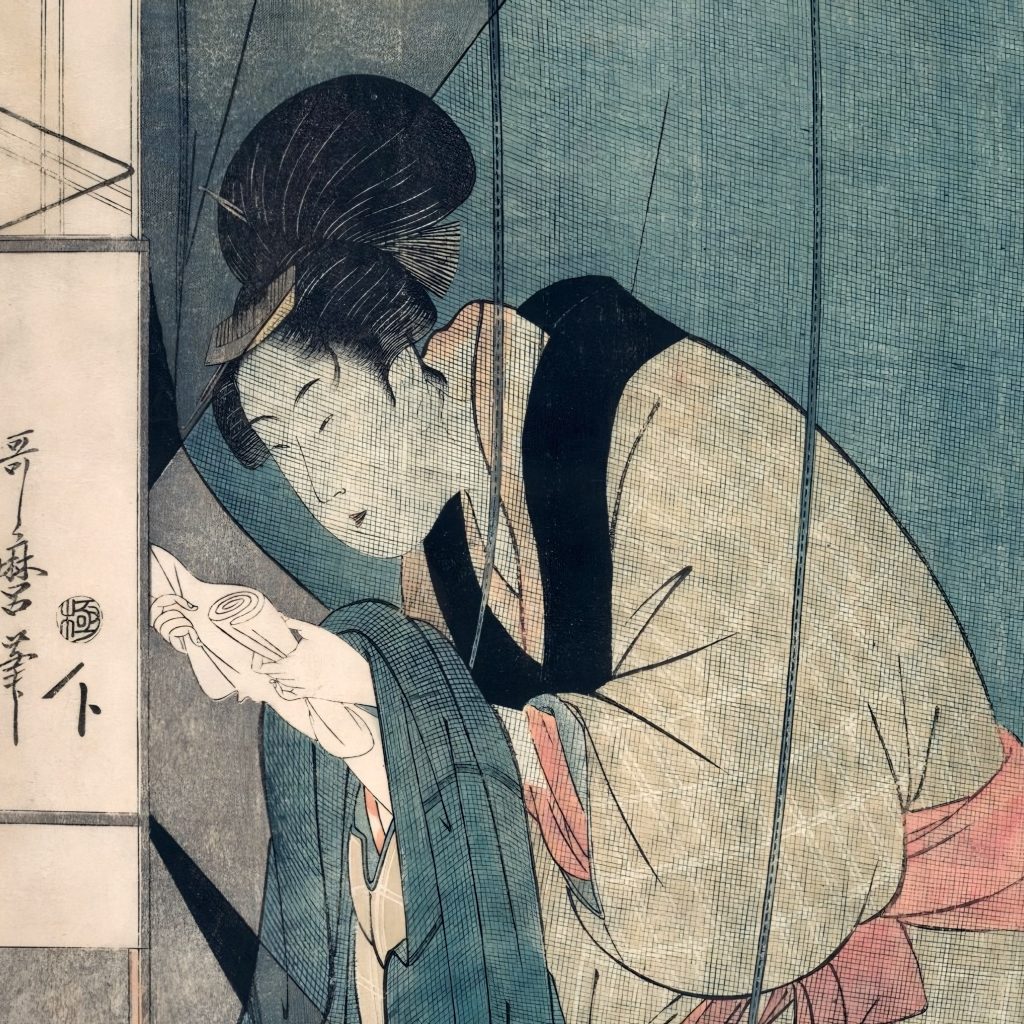
Shunga Ijin is an independent editorial project dedicated to the visual culture of Edo-period Japan, with a particular focus on shunga, ukiyo-e, erotic imagination, and the floating world that surrounded them.
Too often, shunga is reduced to “Japanese erotic prints,” detached from the artistic, literary, and social world that produced them. Yet these images were never isolated curiosities. They belonged to the same universe as landscapes, actors, poetry, travel scenes, ghost stories, courtesans, and everyday urban life.
The artists who created shunga were not marginal figures. They were among the greatest image-makers of Japanese history:
- Katsushika Hokusai,
- Kitagawa Utamaro,
- Suzuki Harunobu,
- Keisai Eisen,
- and many others.
This site explores shunga not simply as erotic material, but as a sophisticated visual language combining humor, desire, aesthetics, symbolism, fashion, theater, poetry, folklore, and social commentary.
The goal is neither scandal nor nostalgia.
It is to understand how Edo Japan imagined intimacy.
What This Site Explores
- major shunga artists and their lives,
- analysis of individual artworks,
- Edo-period symbolism and erotic codes,
- historical and literary context,
- visual composition and printing techniques,
- cultural influence from Edo to modern Japan,
- and the long afterlife of shunga in global imagination.
Many articles combine Japanese, English, French, German, and Italian sources in order to compare interpretations and recover forgotten nuances surrounding the works.
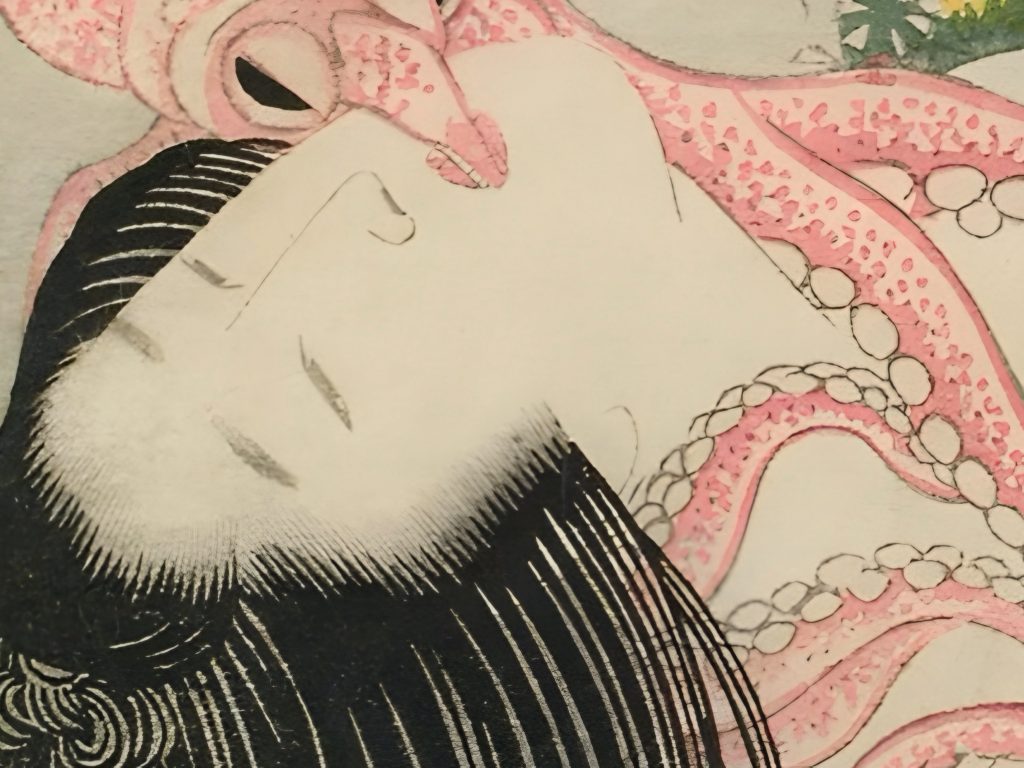
Why “Shunga Ijin”
The word 異人 (ijin) historically referred to an outsider, foreigner, or unfamiliar person.
The title reflects a deliberately external perspective:
looking at Edo erotic art from both inside and outside Japanese culture at once.
Not as voyeurism,
but as observation, translation, interpretation, and rediscovery.
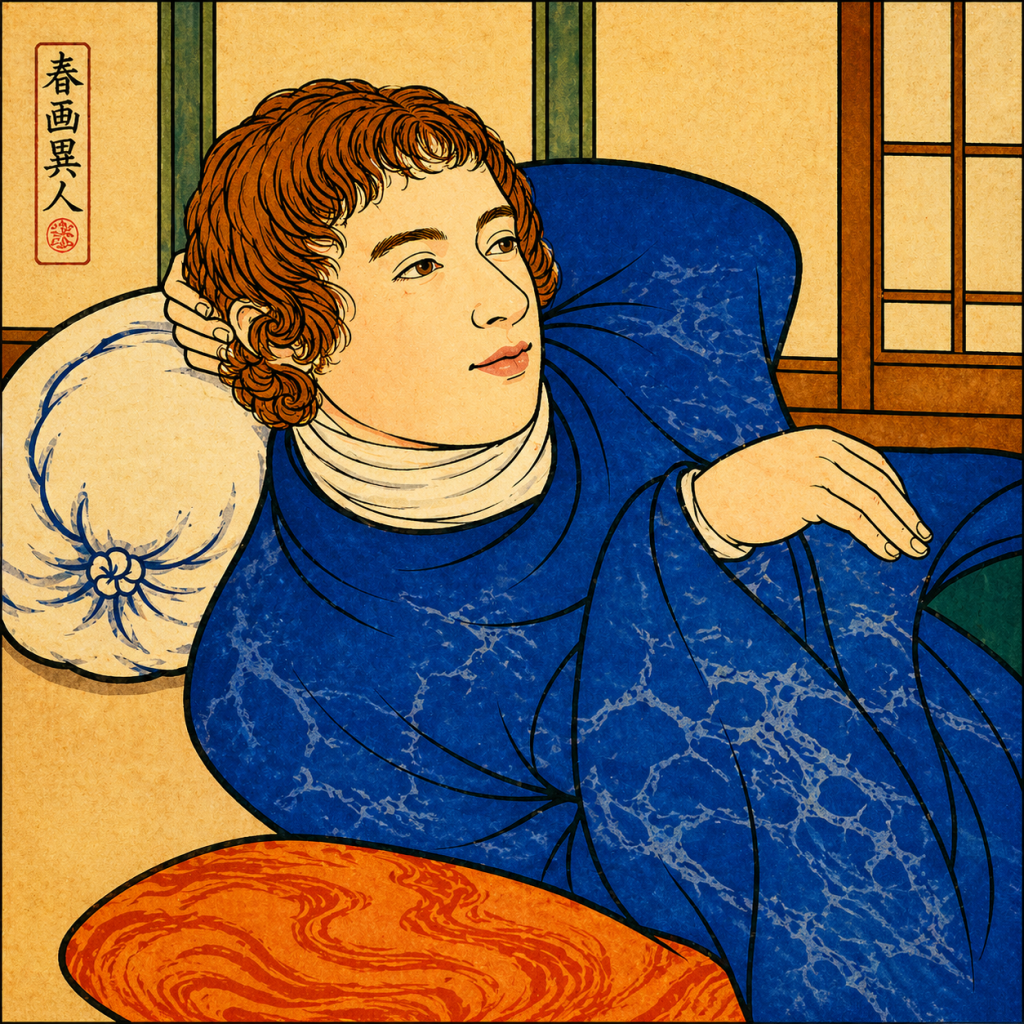
The name is also deliberately not “Shun Gaijin.”
While the similarity may sound playful to some readers, the project is not about presenting erotic Japan as exotic spectacle for foreigners. The word 異人 (ijin) was chosen intentionally for its older nuance: an outsider, a strange person, someone standing slightly beyond familiar categories. The perspective of this site is therefore neither entirely inside nor entirely outside Japanese culture, but somewhere in between observation, translation, fascination, and interpretation.
A Floating World Still Alive
Although created centuries ago, shunga continues to influence modern visual culture:
manga, illustration, cinema, erotic art, graphic storytelling, and contemporary imagination far beyond Japan itself.
Yet many works remain misunderstood, censored, fragmented, or stripped from their historical context.
This project attempts, modestly, to reconnect image, culture, humor, beauty, and meaning.
Because the floating world never entirely disappeared.