
Why Edo Japan Turned Human Desire Into a Laughing Monster
This article examines one of Hokusai’s strangest erotic books. For the wider biography and artistic evolution of the artist, see Katsushika Hokusai.
A Strange Book From the Floating World
A Late Erotic Experiment by Hokusai
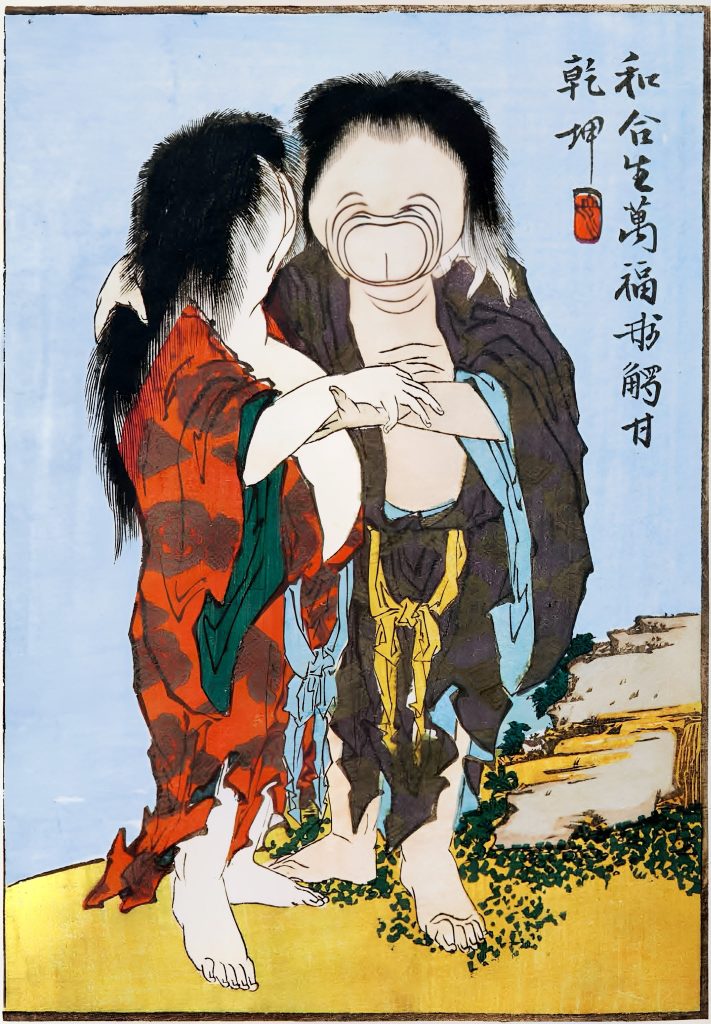
Around 1821, during the final years of his career, Katsushika Hokusai produced one of the strangest erotic works of the Edo period: 『萬福和合神』, usually read today as Manpuku Wagōjin. Japanese catalogues and booksellers consistently identify the work as a three-volume erotic illustrated book belonging to the world of Edo enpon and shunpon, the richly imaginative erotic books that blended storytelling, parody, visual experimentation, sensuality, and humor into a single reading experience.
Unlike isolated erotic prints designed only for immediate visual excitement, Manpuku Wagōjin formed part of a larger literary and narrative project. It is sometimes described almost as a proto-erotic illustrated novel because it reportedly followed relationships, emotional situations, and social contrasts rather than merely presenting disconnected sexual scenes.
The title itself already announces the strange symbolic world Hokusai intended to create. Depending on interpretation, Manpuku Wagōjin may be translated as “Gods of Conjugal Harmony,” “Gods of Infinite Erotic Harmony,” or “Gods of Myriad Marital Blessings.” The ambiguity matters because Hokusai deliberately fused eroticism with prosperity, marriage, humor, and auspicious symbolism.
Ink, Pigment, and Theatrical Grotesque
The work was produced through sophisticated nishiki-e woodblock printing using ink and pigments on paper. Surviving examples vary slightly in size, but documented copies measure approximately 22 × 16 centimeters. Despite that relatively intimate format, the composition possesses extraordinary visual force.
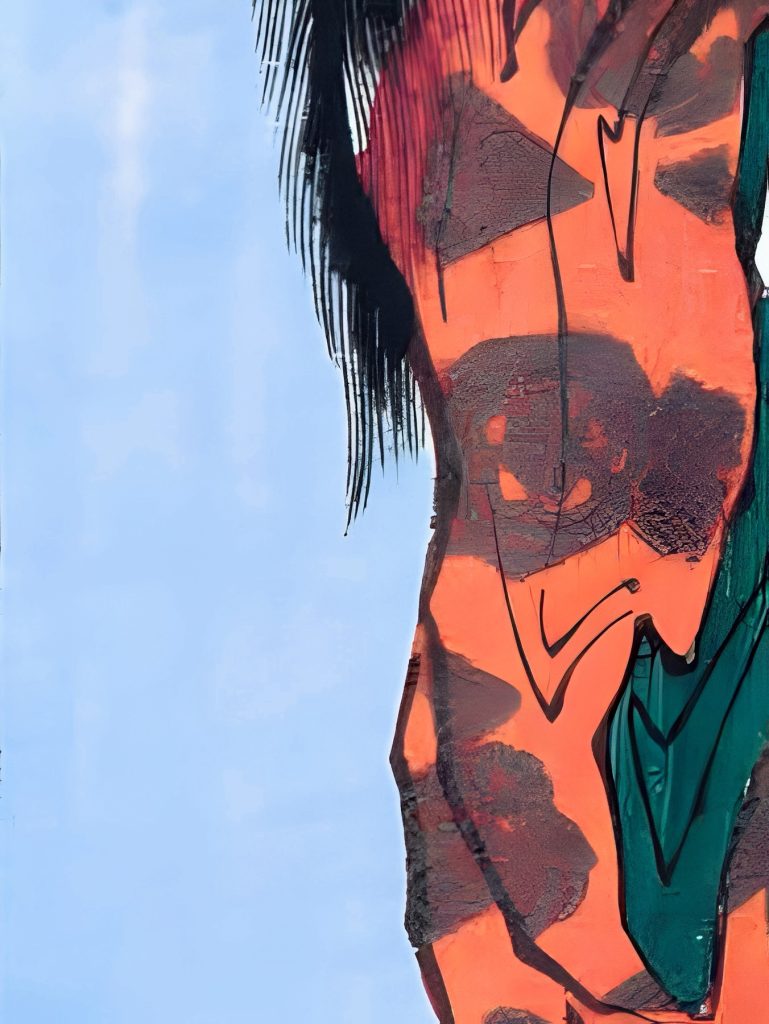
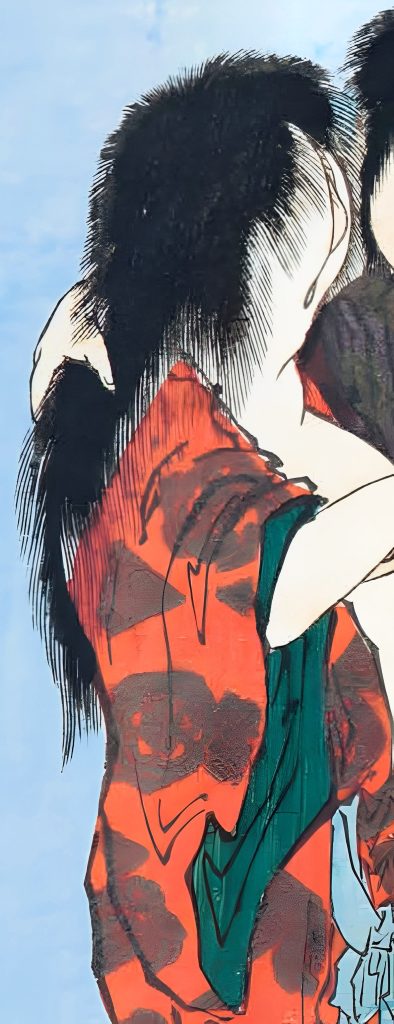
The pale blue background strips away almost every realistic detail while the swollen face, exposed flesh, black hair, and heavy red robe collide with startling theatrical intensity. The figures appear grotesque, exaggerated, almost mask-like. The enormous mouth dominates the image so aggressively that modern viewers often struggle to decide whether they are looking at an erotic scene, a comic caricature, or a supernatural apparition.
The uncertainty is deliberate.
Where the Work Survives Today
Today the work survives through several archives, collections, and catalogues, including references held by the International Research Center for Japanese Studies, specialist Japanese antiquarian dealers such as Soumei-dō, and auction catalogues published by Christie’s. Individual pages also circulate through museum archives and exhibitions devoted to Hokusai and the broader history of Shunga.
Recent exhibitions increasingly emphasize the work’s literary sophistication, grotesque humor, and symbolic complexity rather than reducing it to simple erotic imagery.
Why the Image Feels So Strange
A Face Suspended Between Comedy and Desire
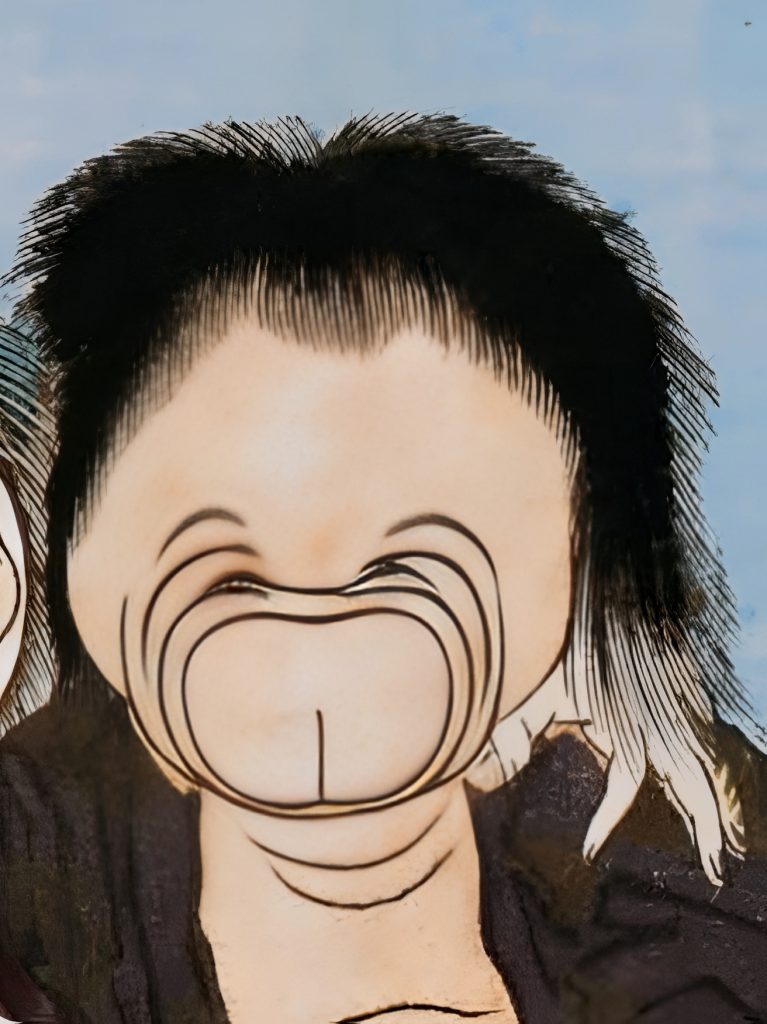
At the center of the composition hovers a gigantic swollen face whose enormous mouth dominates the scene with almost absurd force. The anatomy bends awkwardly toward caricature. Bodies lean unnaturally. Proportions distort themselves deliberately until the image begins oscillating between theatrical comedy, erotic metaphor, folk monster, and visual pun.
The pale blue emptiness surrounding the figures intensifies this instability. Hokusai removes almost every architectural or narrative detail from the scene so that the bodies appear suspended inside a floating theatrical void. The effect resembles actors isolated upon a stage where gesture, touch, and symbolic presence matter more than realism.
Bodies lean toward one another awkwardly. Hands touch. Robes slip open. Faces advance into the viewer’s space. The image privileges emotional tension and bodily contact over anatomical perfection.
The giant face itself almost certainly functions as a visual pun. Edo artists frequently transformed bodies into symbolic forms or allowed ordinary anatomy to acquire erotic secondary meanings through exaggeration and suggestion. Here the swollen contours evoke erotic imagery while technically remaining only a face.
The viewer therefore hesitates constantly between laughter and erotic unease.
Harmony, Fortune, and the Sweetness of Touch
The intellectual center of the work lies in the concept of
「和合」(wagō).
In Edo culture, the word suggested far more than simple romance. It evoked harmonious union between masculine and feminine principles while also implying fertility, emotional warmth, prosperous marriage, domestic peace, and cosmic balance.
This symbolic logic appears directly in the inscription running vertically through the image:
「和合生萬福妙触甘乾坤」
adds another symbolic layer because the term traditionally refers to Heaven and Earth, yin and yang, and the balance between male and female principles.
The phrase functions less like ordinary prose than like condensed erotic philosophy. Harmonious touch does not merely produce pleasure. It sweetens the world itself.
The final seal-like inscription:
「乾坤」
“Kenkon”
adds another symbolic layer because the term traditionally refers to Heaven and Earth, yin and yang, and the balance between male and female principles.
The image therefore transforms erotic union into something almost cosmological.
Western viewers have sometimes interpreted grotesque Shunga imagery through lenses shaped by horror, psychoanalysis, or surreal violence. Edo viewers approached such exaggeration very differently. The grotesque here does not destroy sensuality. It amplifies appetite, abundance, fertility, and comic bodily vitality.
Why Only Edo Japan Could Have Produced This
The deeper one enters Manpuku Wagōjin, the more profoundly Edo it becomes.
Edo erotic culture rarely separated sexuality from humor, parody, theatricality, fertility symbolism, or bodily absurdity. Bodies were not always idealized in the classical Western sense. They could become comic, swollen, exaggerated, awkward, or grotesque while remaining erotic at the same time.
This worldview differed sharply from later Victorian moral frameworks that increasingly isolated sexuality from laughter, folk culture, and symbolic prosperity.
The work also reflects broader Tokugawa attitudes toward intimacy and marriage. Erotic union could symbolize emotional harmony, fertility, domestic warmth, prosperity, and even cosmic balance. Shunga therefore often carried auspicious and talismanic dimensions alongside its sensual and comic functions.
The exaggerated face recalls kabuki masks and theatrical caricatures while the playful deformation resembles the visual humor found in kibyōshi illustrated fiction and other comic traditions of the floating world. Hokusai draws fully from that visual culture of exaggeration, parody, and symbolic play.
The Eroticism of Awkward Bodies
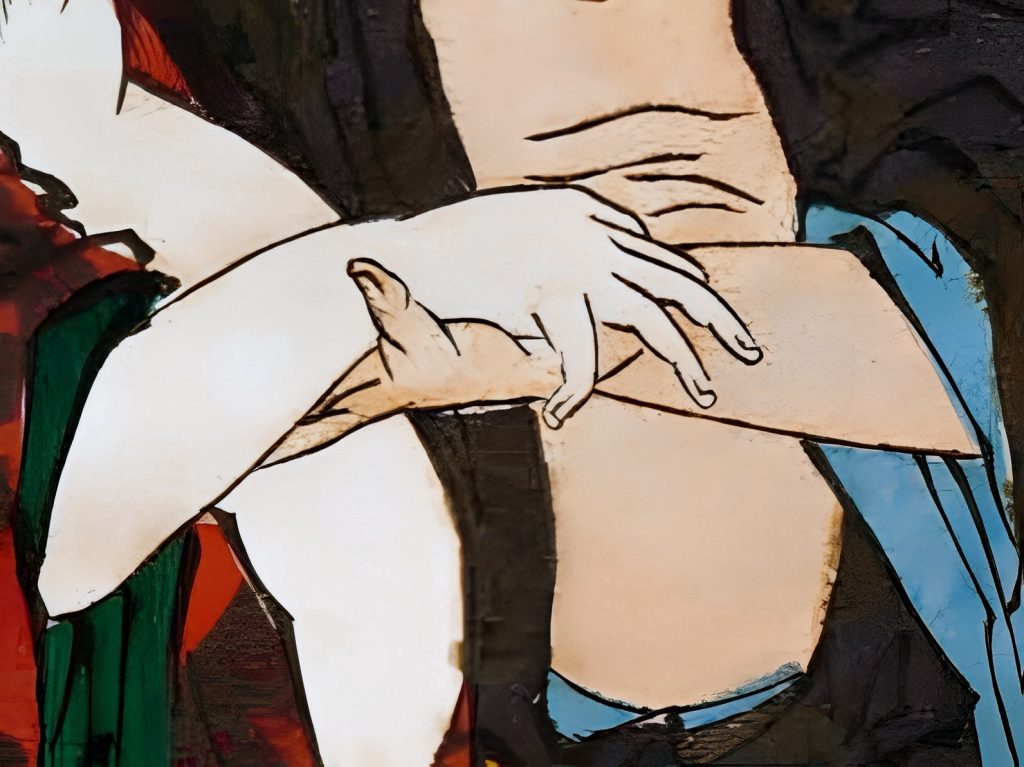
One remarkable quality of the image lies in how insistently erotic it feels despite avoiding explicit sexual display.
Sensuality emerges through bodily proximity, exposed flesh, touching hands, robe slippage, exaggerated physicality, and the philosophy of harmonious touch expressed by the inscription itself. The bodies appear imperfect, awkward, and comic, yet they also feel physically alive and emotionally warm.
The eroticism is deeply tactile. One almost feels the pressure of bodies leaning together, the warmth beneath layered cloth, the heaviness of flesh, and the awkward intimacy created by excessive closeness.
This differs strongly from many modern forms of pornography built around visual explicitness alone. Hokusai instead constructs sensuality through atmosphere, gesture, humor, and bodily entanglement.
Eroticism here feels tactile, playful, excessive, and profoundly human.
Why This Work Still Feels Unique
Even within Hokusai’s erotic production, Manpuku Wagōjin remains unusually strange.
The work fuses grotesque caricature, folk religion, theatrical comedy, fertility symbolism, erotic philosophy, and narrative storytelling into a single unstable image. The gigantic face feels simultaneously comic, unsettling, sensual, ridiculous, and strangely warm.
Very few Shunga works sustain that emotional ambiguity so successfully.
The image never fully settles into one category. It remains suspended between parody and desire, grotesque comedy and erotic tenderness.
The Strange Afterlife of a Grotesque God
Hokusai’s Late Theater of Desire
Modern exhibition commentary has emphasized that Hokusai appears to have handled both image and text for the project himself, making Manpuku Wagōjin unusually personal within his erotic production. Specialists also often regard it as one of his final major erotic books and among his most narratively ambitious Shunga works.
Rather than presenting disconnected erotic encounters, the larger project reportedly followed relationships, emotional situations, and social contrasts in a manner approaching illustrated fiction.
Folk Gods, Fertility, and Comic Caricature
The work draws from several older cultural traditions simultaneously. Japanese sources explicitly connect it to folk fertility imagery and figures associated with:
和合神,
deities linked to marital harmony, prosperity, fertility, and good fortune.
The grotesque comedy of the image also belongs to a wider Edo fascination with caricature, theatrical distortion, visual puns, and comic deformation. Similar energies appear throughout kibyōshi literature, folk imagery, narrative Shunga books, and the exaggerated visual experiments later associated with Hokusai’s manga works.
From Edo Grotesque to Modern Surrealism
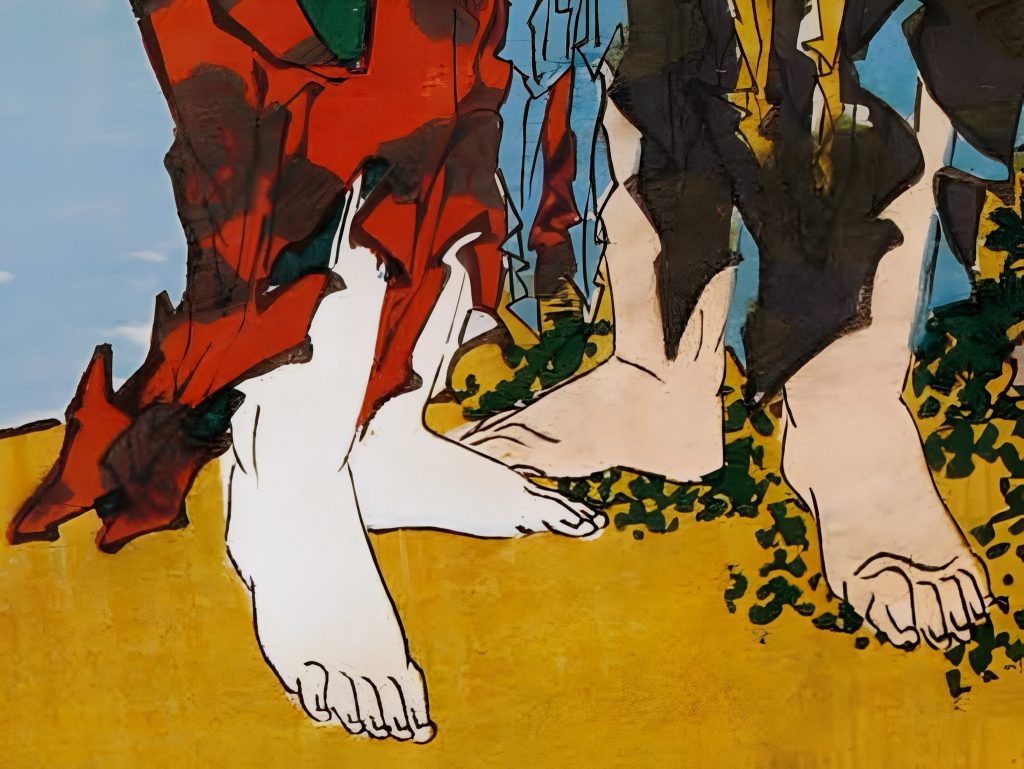
The image often surprises contemporary viewers because its distortions feel strangely modern. The grotesque simplification of anatomy sometimes recalls surrealism, caricature, manga abstraction, or twentieth-century graphic experimentation.
Long before modern Surrealists explored unstable bodies and dreamlike deformation, Edo artists were already experimenting with visual ambiguity, theatrical exaggeration, and symbolic distortion.
That strange modernity partly explains why specialists continue valuing Manpuku Wagōjin so highly today even though the work remains less internationally famous than some of Hokusai’s other erotic images.
The work also challenges the simplistic idea that Shunga consisted merely of explicit pornography. Hokusai instead constructs a floating world where grotesque humor, erotic philosophy, theatrical caricature, fertility symbolism, folk religion, and narrative storytelling merge together inside a single absurd smiling face.
Where the Laughter Leads Next
The image naturally opens toward broader areas of Edo visual culture, including kibyōshi humor, narrative Shunga traditions, folk fertility symbolism, theatrical caricature, and the strange visual experiments later associated with Hokusai’s manga works.
Readers interested in exploring these worlds further quickly encounter neighboring traditions where eroticism, comedy, superstition, and storytelling constantly overlap. The work therefore functions not as an isolated curiosity but as an entry point into a much larger Edo imagination filled with grotesque humor, visual play, and symbolic sensuality.
Reading the Image Like an Edo Viewer
The Geometry of Instability
The composition achieves its emotional effect through deliberate imbalance. The bodies lean awkwardly, weight distribution feels unstable, and the gigantic face pushes aggressively into the viewer’s space. Hokusai creates comic tension through asymmetry rather than through classical harmony.
The pale blue emptiness surrounding the figures also plays a crucial role. By removing architectural detail and realistic environment, Hokusai transforms the scene into a floating theatrical space where gesture, color, and symbolic presence dominate perception.
The composition therefore behaves less like realistic illustration than like visual performance.
Grotesque Style and Theatrical Deformation
Hokusai deliberately privileges caricature over realism. Faces swell unnaturally, contours exaggerate themselves, and anatomy bends toward theatrical distortion. The figures resemble kabuki masks, folk demons, comic actors, and lucky grotesques simultaneously.
The controlled color palette intensifies this effect. The warmth of the red robe collides against pale exposed flesh while the black hair anchors the composition visually inside the surrounding atmospheric blue.
The result feels comic, sensual, uncanny, and strangely modern all at once.
The Words Hidden Inside the Image
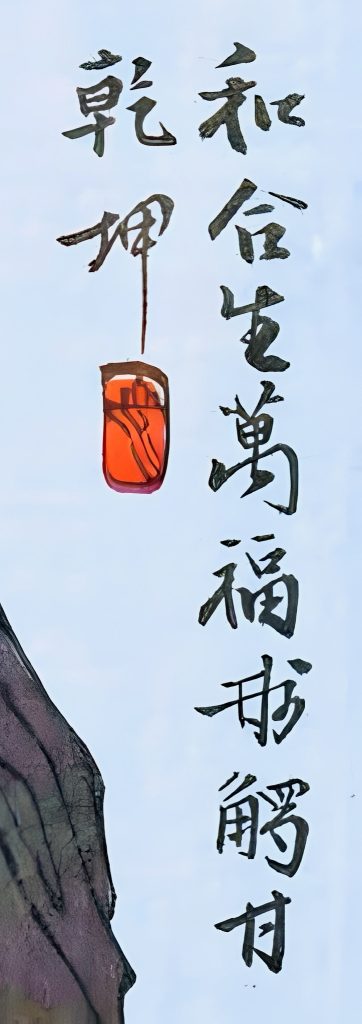
The inscription surrounding the figures forms an essential part of the composition rather than simple decoration. Edo viewers were expected to read, interpret, and visually experience the image simultaneously.
The main inscription:
「和合生萬福妙触甘乾坤」
“Harmony gives birth to countless blessings; exquisite touch sweetens heaven and earth.”
「わごうしちまん ふくのかたち あまし
けんこん」
Importantly, while the inscription itself survives in documented sources, no complete reliable scholarly transcription of all surrounding page text appears readily available online. Inventing missing passages would therefore be misleading.
The text compresses together ideas of erotic union, fertility, prosperity, harmony, and cosmic balance into a single poetic phrase. Its instability also reflects a broader Edo pleasure in ambiguity, layered interpretation, and visual-literary play.
Related Reading
Katsushika Hokusai — the artist’s life, schools, subjects, and late transformation.
Hokusai’s Octopus and the Ama — Hokusai’s most famous erotic composition, and the image that shaped much of the Western imagination around shunga and tentacles.