
The Old Man Mad About Painting Who Turned Waves, Mountains, and Desire Into Living Creatures
Few artists escaped their own century as completely as Katsushika Hokusai. His images survived the collapse of Edo Japan, crossed oceans, transformed European modern art, entered manga culture, conquered museum gift shops, and eventually became part of global visual memory itself. The enormous wave towering above fragile boats in The Great Wave off Kanagawa now feels almost detached from history, as if it had always existed.
Yet Hokusai himself lived far from permanence. He changed names repeatedly, moved constantly, struggled financially, argued with artistic conventions, and spent his life chasing new forms of visual energy. While many ukiyo-e artists remained attached to a single specialty, Hokusai wandered obsessively through landscapes, ghosts, manuals, sketchbooks, erotic books, legends, animals, actors, and religious visions. Even in old age, he still believed he had not yet become the artist he wanted to be.
That restless ambition explains why his work still feels alive today. Hokusai never treated the world as static. Waves attack like living creatures. Mountains breathe silently behind human drama. Fabrics twist with nervous movement. Bodies collapse into desire or exhaustion. Clouds and rivers seem animated by the same invisible rhythm.
He did not simply depict Edo Japan.
He made it move.
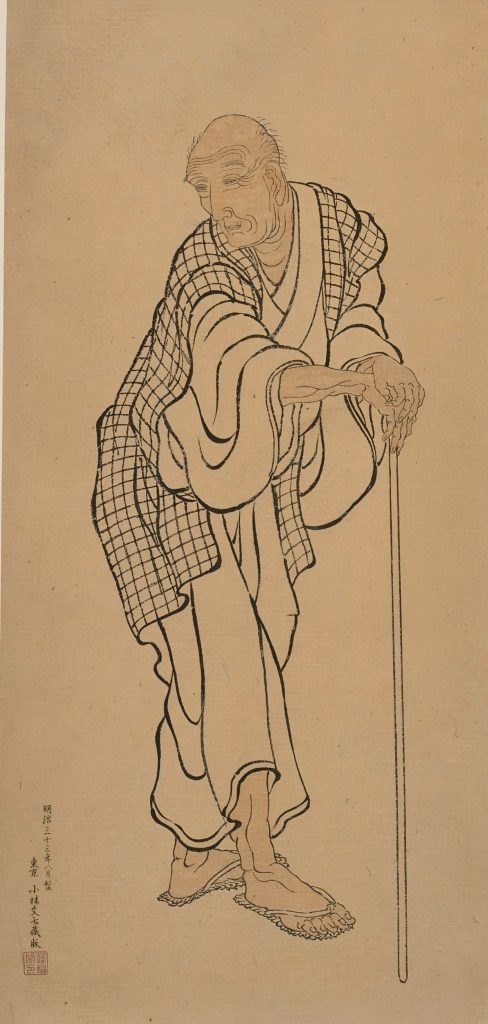
The Man Behind the Great Wave
Quick Facts
Hokusai was born in Edo in 1760, probably in the Honjō-Warigesui district of present-day Tokyo, and died there on May 10, 1849. He first trained within the Katsukawa school under Katsukawa Shunshō before gradually becoming one of the most independent artists of the ukiyo-e tradition.
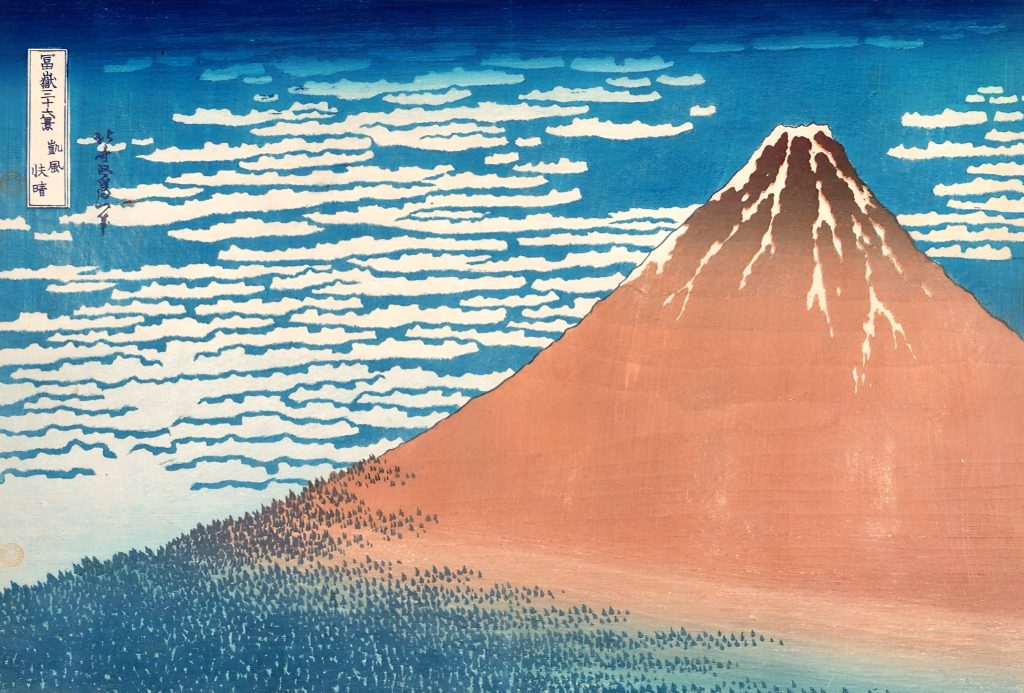
His immense body of work includes woodblock prints, illustrated books, surimono, landscapes, manga sketchbooks, bijin-ga, actor prints, ghosts, manuals, warriors, and shunga. Among his most famous creations stand Thirty-six Views of Mount Fuji, The Great Wave off Kanagawa, Fine Wind, Clear Morning, Hokusai Manga, One Hundred Views of Mount Fuji, and Kinoe no Komatsu.
Modern museums regularly describe him as one of the most inventive artists in Japanese history. The description feels deserved. Hokusai expanded ukiyo-e far beyond the pleasure districts and kabuki theaters that originally dominated the genre and transformed popular print culture into something simultaneously commercial, poetic, comic, philosophical, and universal.
From Edo Child to Apprentice
Hokusai entered the world during the explosive growth of Edo, one of the largest cities on earth at the time. Merchants, craftsmen, publishers, entertainers, wandering samurai, and urban consumers filled the city with commercial energy. The floating world did not belong only to courtesans and actors. It also belonged to booksellers, print workshops, restaurants, poetry circles, and ordinary townspeople eager for images.
Several traditions connect the young Hokusai to the Nakajima family, makers of mirrors for the shogunal court. His childhood name was likely Tokitarō. Before becoming a painter, he reportedly trained as a woodblock carver and spent his youth close to the technical world of printing and illustrated books.
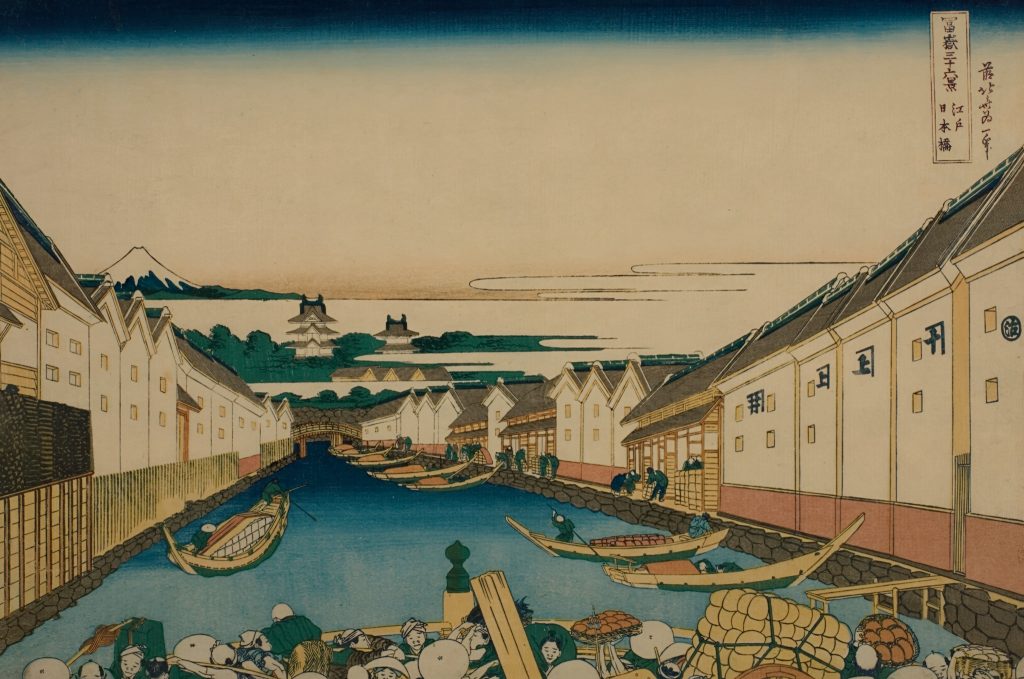
That early experience mattered enormously. Hokusai understood prints not merely as drawings but as collaborative objects shaped by artists, carvers, printers, publishers, and commercial circulation.
As a teenager he entered the workshop of Katsukawa Shunshō, one of the great masters of actor prints. The Katsukawa school specialized in kabuki imagery and dynamic figure composition. Hokusai absorbed its visual discipline quickly, yet he never remained stylistically obedient for long. Even during his early years, his curiosity already pushed him beyond the boundaries of conventional ukiyo-e production.
A Restless Adult Life
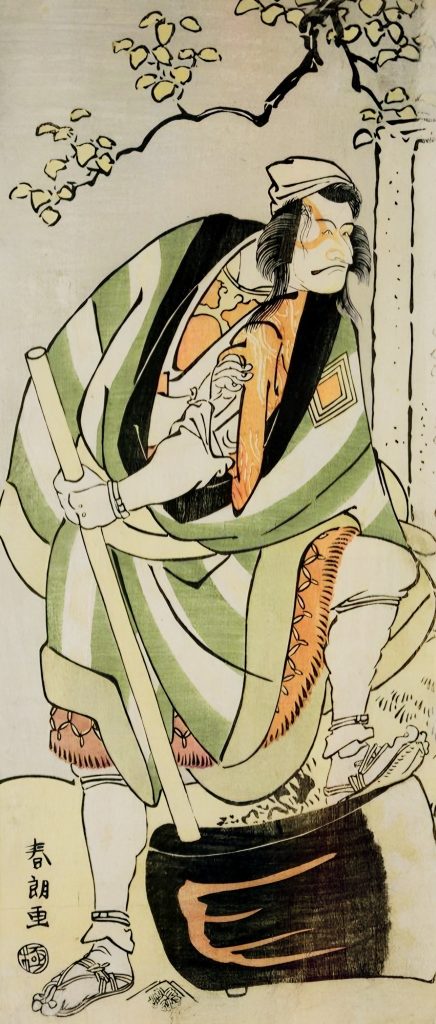
Hokusai first gained recognition through actor prints and commercial illustration, but he gradually separated himself from the artistic formulas of his school. Around the 1790s he adopted the name Sōri in connection with the Tawaraya circle and moved toward a far more independent artistic identity.
The following decades became astonishingly productive.
He designed surimono for elite poetry societies, illustrated kyōka books and novels, created drawing manuals for aspiring artists, experimented with Western-style perspective, published manga sketch collections, and produced landscapes that permanently changed Japanese print culture. His collaborations with publishers such as Nishimuraya Yohachi eventually produced the Thirty-six Views of Mount Fuji series during the early 1830s.
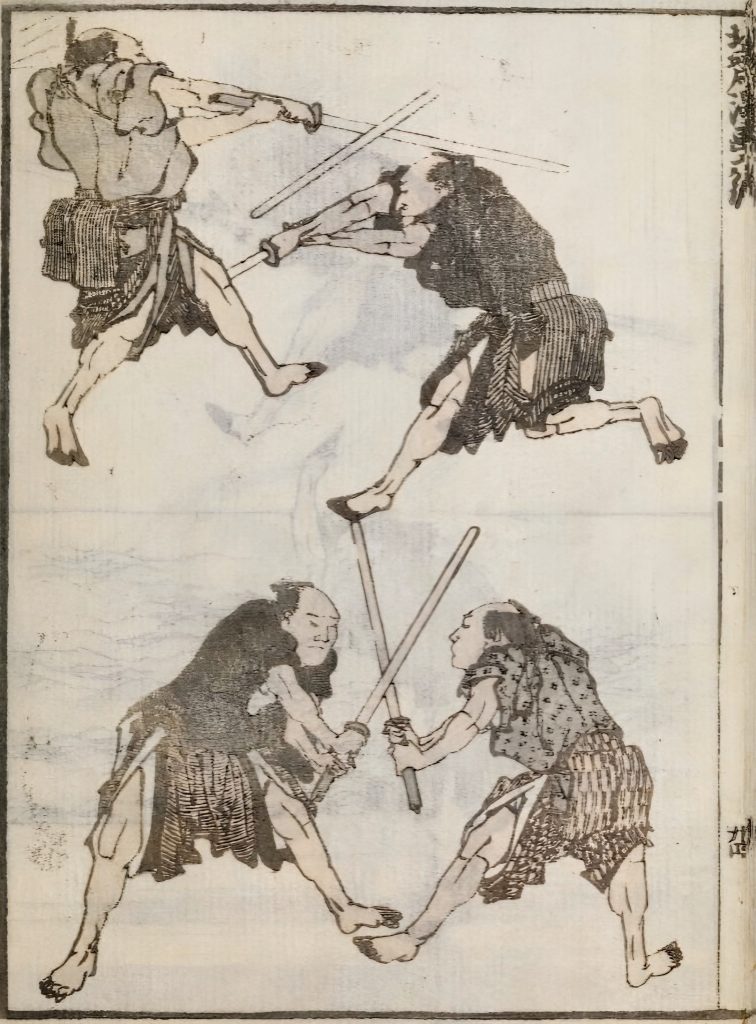
Those prints transformed landscape into drama. Mountains no longer served merely as decorative scenery behind human activity. Weather, distance, fog, rivers, labor, and movement themselves became the true protagonists.
At the same time, Hokusai’s personal life remained unstable. He changed artistic names repeatedly, moved house obsessively, struggled with money, endured family difficulties, and constantly reinvented his visual identity. While other ukiyo-e artists built stable commercial brands around actors or courtesans, Hokusai refused to remain fixed inside a single artistic territory.
That instability became part of his genius.
The Final Years of the “Old Man Mad About Painting”
Old age did not soften Hokusai. It intensified him.
During his later years he adopted the extraordinary name Gakyō Rōjin Manji, usually translated as “the old man mad about painting.” The phrase feels almost painfully honest.
Rather than fading quietly, he entered another period of reinvention. His late works grew increasingly spiritual and mythic. Dragons twist violently through clouds. Tigers emerge from darkness with raw physical presence. Chinese lions, ghosts, Buddhist imagery, and symbolic landscapes dominate his imagination.
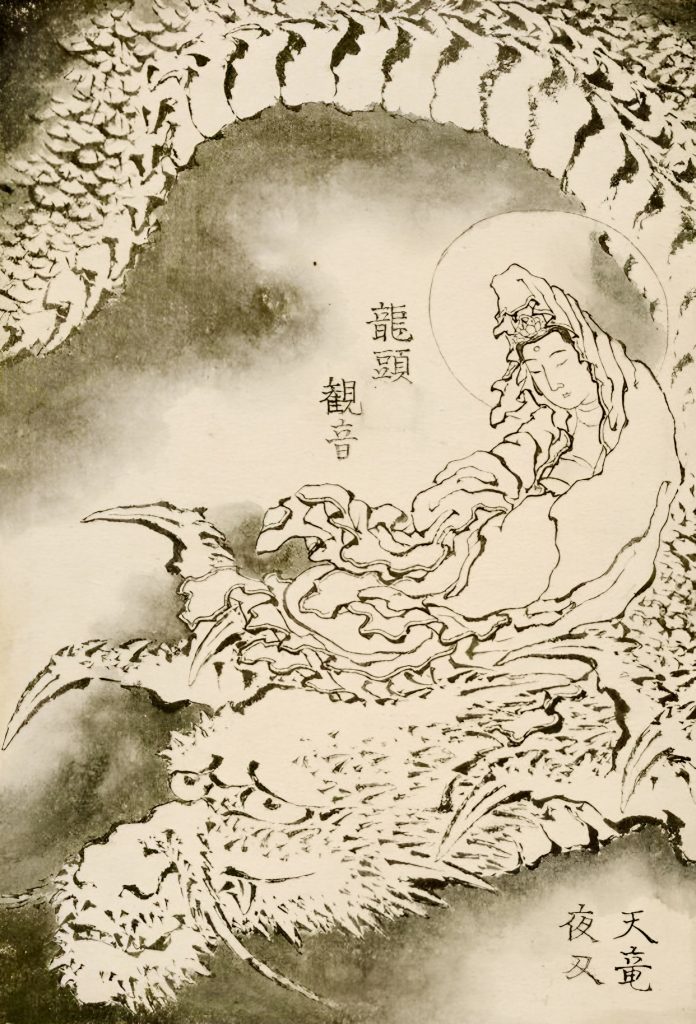
At the same time, One Hundred Views of Mount Fuji distilled decades of artistic experimentation into something calmer, stranger, and more philosophical. Mount Fuji ceased to function simply as landscape. It became permanence itself, silently observing the instability of human existence.
Hokusai died in 1849 at the age of eighty-nine. According to the famous remark associated with his deathbed, he lamented that if heaven had granted him only a few more years, he might finally have become a true artist.
For a man who had already transformed Japanese art forever, the statement remains both tragic and strangely magnificent.
Reinventing Ukiyo-e
Masters, Schools, and Artistic Influences
Although Hokusai eventually became difficult to classify, his artistic formation emerged from several overlapping traditions.
The Katsukawa school provided his technical foundation through actor prints and expressive figure composition. Later he absorbed elements from the Tawaraya school as well as influences from Kano painting, classical Japanese themes, Chinese visual traditions, and imported Western perspective entering Japan through Dutch trade networks.
His strong devotion to Nichiren Buddhism and Myōken, the North Star deity, also shaped many of his later works. Spiritual tension quietly runs beneath his mountains, storms, dragons, and cosmic landscapes.
Unlike artists who simply inherited a style, Hokusai consumed visual systems aggressively. He borrowed, dismantled, exaggerated, recombined, and transformed them until they became unmistakably his own.
What Makes Hokusai Instantly Recognizable
Hokusai’s art moves.
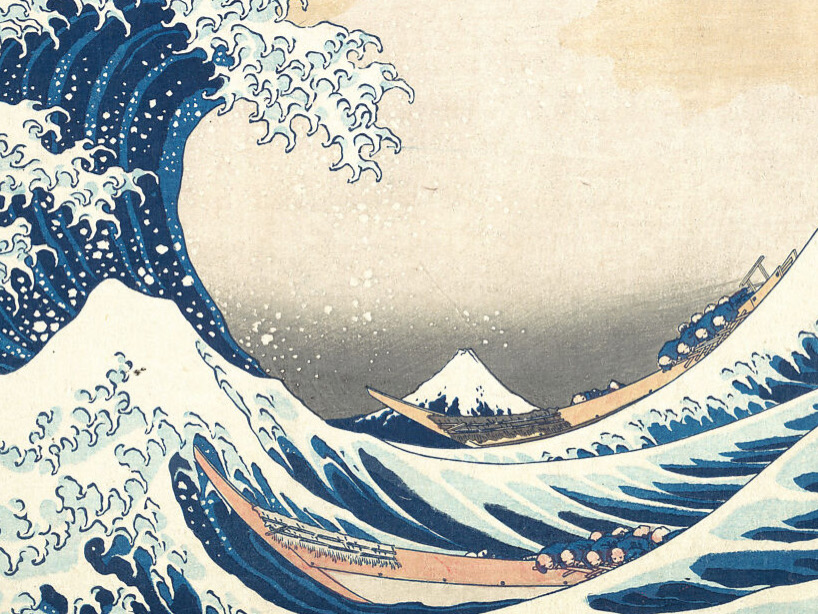
That movement defines his visual language more deeply than any single subject matter. Waves rise like claws ready to strike. Clouds twist across the sky with rhythmic tension. Fabrics ripple around bodies with nervous force. Even mountains appear internally alive.
He rarely constructs static compositions. Instead he compresses energy into asymmetrical structures filled with directional movement. His line work remains sharp and precise while simultaneously carrying rhythm and instability.
The Great Wave off Kanagawa demonstrates this perfectly. The immense cresting wave towers above fragile boats while Mount Fuji appears far away as a small triangular echo hidden inside the larger form. Natural force becomes terrifying and elegant at the same time. The imported Prussian blue pigments intensify the scene further and give the image its strange modern freshness.
Hokusai did not simply observe nature.
He animated it.
How His Style Changed Across Decades
Hokusai reinvented himself constantly across nearly seven decades of artistic production.
His early years remained close to Katsukawa traditions through actor portraits and figure-centered ukiyo-e. Gradually he moved toward surimono, literary illustration, and increasingly experimental compositions.
The mature period transformed him completely. The Hokusai Manga collections, perspective studies, travel imagery, and especially the Thirty-six Views of Mount Fuji series expanded ukiyo-e into something broader and more universal. Landscape stopped functioning as decorative background and became emotional architecture.
His late years pushed even further toward spiritual intensity. Dragons, tigers, ghosts, mythic beings, and religious imagery filled his paintings and books. The artist who once produced commercial actor prints for Edo consumers ended his life exploring cosmic movement and metaphysical atmosphere.
Few artists changed so radically without losing coherence.
Landscapes, Ghosts, Actors, and Everyday Life
Hokusai worked across almost the entire ukiyo-e universe.
He created actor prints, bijin-ga, warrior scenes, legends, waterfalls, bridges, flowers, birds, manuals, illustrated books, ghost imagery, and landscapes that permanently transformed Japanese visual culture. He depicted laborers carrying timber, fishermen fighting rough seas, travelers crossing bridges, artisans working quietly, and ordinary people moving through seasonal rhythms.
That enormous range explains why reducing Hokusai to The Great Wave alone feels misleading. His imagination moved constantly between popular entertainment, visual experimentation, poetic observation, humor, and technical curiosity.
Even his sketchbooks seem unable to remain still.
The Place of Shunga Within His Work
Erotic imagery never dominated Hokusai’s production numerically, yet shunga remained an important and fully integrated part of his artistic universe.
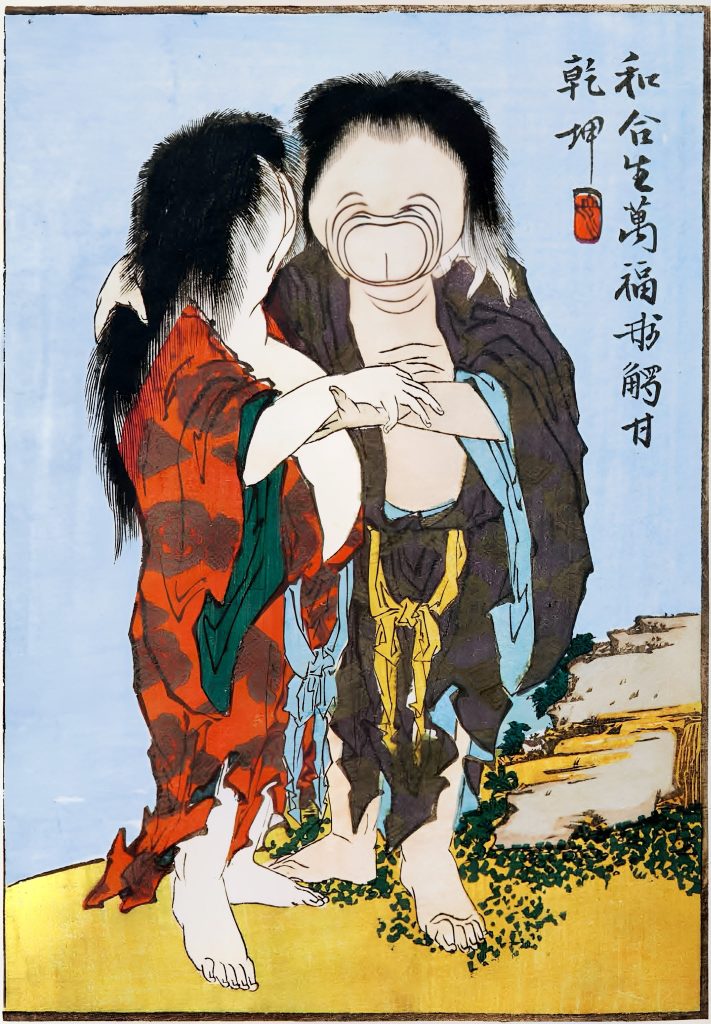
He designed erotic books and prints throughout his mature years, including works such as Ehon tsuhi no hinagata and the famous Kinoe no Komatsu from 1814. These images do not feel disconnected from the rest of his work. They share the same fascination with exaggerated movement, theatrical staging, comic energy, fantasy, and visual excess.
Hokusai approached erotic art neither timidly nor mechanically. His shunga belongs naturally beside his waves, ghosts, dragons, and landscapes.
Hokusai and the Erotic Imagination
Bodies, Fantasy, Humor, and Visual Excess
Hokusai’s erotic imagination operates through exaggeration, intimacy, humor, and transformation.
Bodies enlarge beyond realistic proportion. Fabrics tighten dramatically around lovers. Voyeuristic framing traps viewers inside cramped interiors filled with movement and tension. Faces shift constantly between pleasure, embarrassment, exhaustion, surprise, and comic absurdity.
In works such as Kinoe no Komatsu, eroticism becomes narrative theater. The famous octopus scene later isolated in the West as The Dream of the Fisherman’s Wife originally formed part of a much larger visual and literary universe mixing fantasy, marine symbolism, parody, dream logic, and humor.
The image feels erotic, but also strange, playful, monstrous, and oddly funny at the same time.
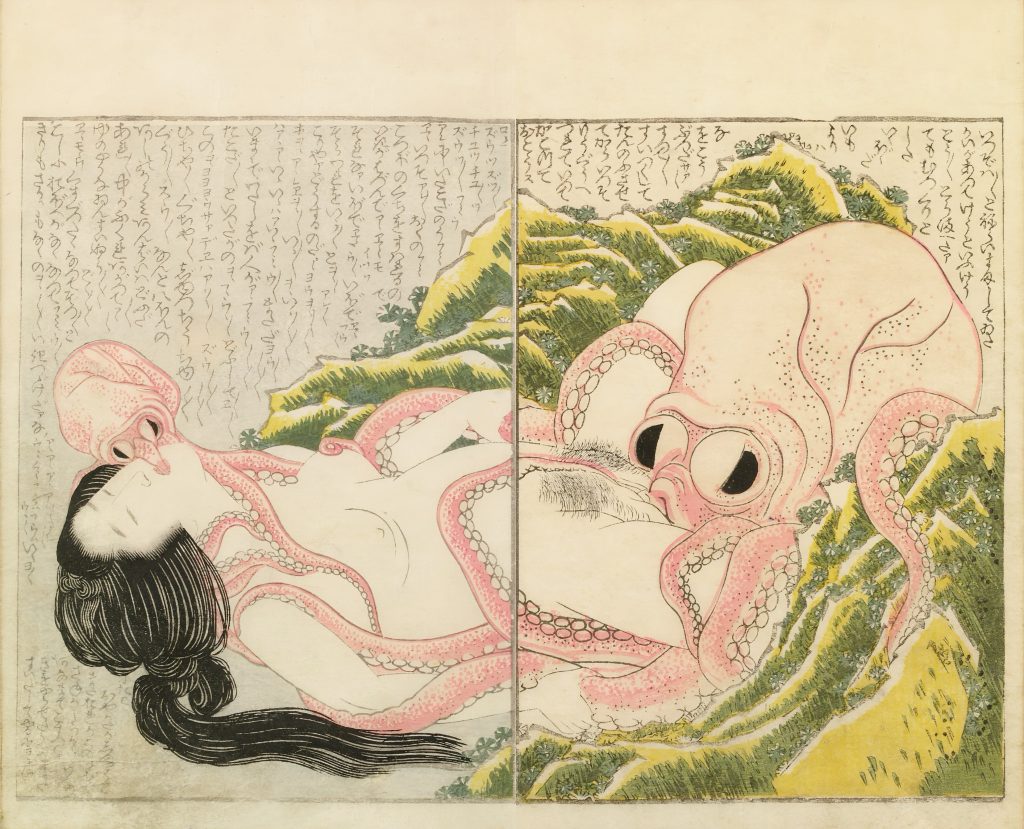
That ambiguity defines much of Hokusai’s shunga. Desire rarely appears as pure realism. Instead it expands into visual imagination where bodies, animals, ghosts, textures, and emotions collide freely.
Shunga, Censorship, and Western Misunderstandings
During the Edo period, shunga circulated widely within urban print culture. People purchased, exchanged, gifted, hidden, and enjoyed erotic books across many levels of society. These works combined pleasure with parody, literacy, fashion, fertility symbolism, and visual experimentation.
Modern categories often distort that world badly.
After the Meiji period imported stricter moral frameworks from the West, erotic prints became increasingly difficult to discuss publicly. Museums later isolated shunga from the larger ukiyo-e ecosystem and often treated it either as embarrassing obscenity or exotic curiosity.
The famous octopus image suffered especially from this fragmentation. Modern audiences frequently reinterpret it as an ancestor of “tentacle porn” while forgetting its original Edo context filled with literary references, visual parody, comic exaggeration, and playful fantasy.
Hokusai’s erotic art belongs to a broader floating world culture where humor, sensuality, storytelling, and experimentation constantly overlapped.
Why Hokusai Never Disappeared
From Edo Prints to Global Modern Art
Hokusai’s influence spread far beyond Japan during the nineteenth century.
European artists associated with Japonisme and modernism admired his compositions intensely. Painters such as Claude Monet, Vincent van Gogh, Edgar Degas, and Paul Gauguin absorbed lessons from Japanese asymmetry, flat color, cropped perspective, and rhythmic composition.
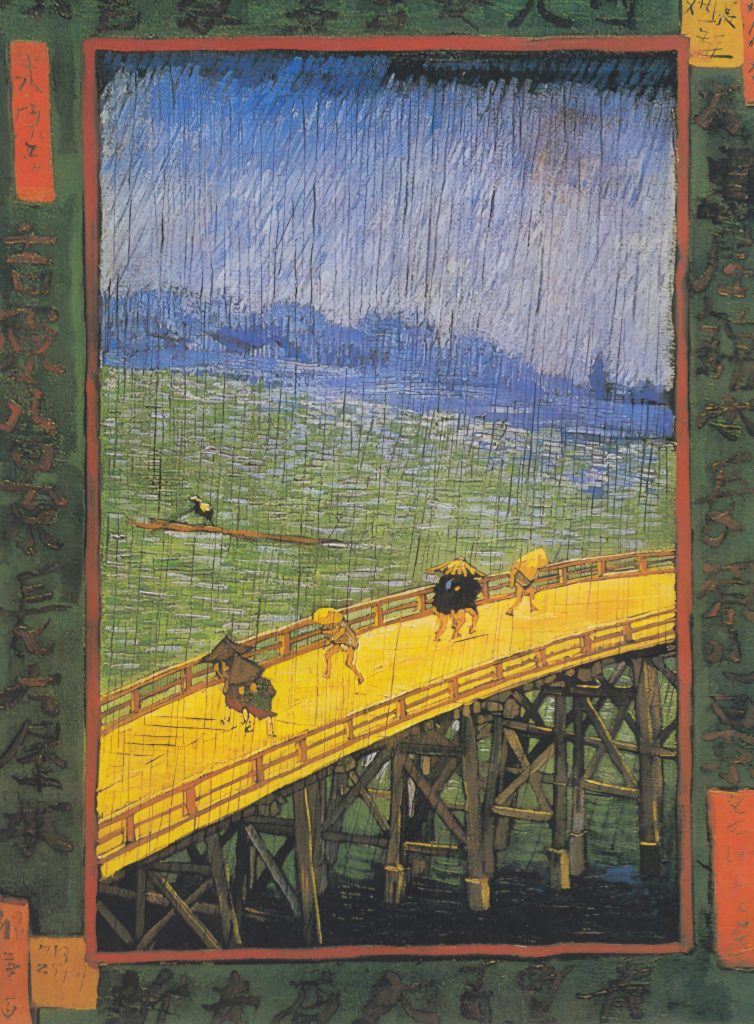
Inside Japan, Hokusai’s influence continued through illustrated books, graphic design, manga vocabulary, and popular visual culture. The Hokusai Manga collections helped popularize the word “manga,” even though those books function more as sketch compilations than modern comics.
His visual DNA now appears almost everywhere.
Why Hokusai Still Feels Modern
Hokusai still feels modern because he understood movement instinctively.
Waves crash with violent force. Wind bends trees and fabrics. Crowds surge across bridges. Bodies collapse into desire. Clouds drift like living organisms. Every element participates in the same visual rhythm.
At the same time, his art balances opposites constantly: popular and sophisticated, comic and philosophical, decorative and terrifying, intimate and cosmic.
That strange balance explains why The Great Wave survives so easily across centuries and media. The image works equally well inside museums, on banknotes, in fashion, in manga culture, or inside internet meme culture because its energy remains immediately readable.
Hokusai captured something larger than Edo Japan alone.
He captured movement itself.
Related Hokusai Shunga on Shunga Ijin
Hokusai on Shunga Ijin
Hokusai’s erotic imagination can be explored further through detailed analyses of specific works.
- Hokusai’s Octopus and the Ama — an analysis of his most famous erotic image, often misunderstood in the West through the later lens of tentacle fantasy.
- The Gods of Erotic Harmony — a reading of Manpuku Wagōjin, one of Hokusai’s strangest late erotic experiments, where desire becomes comic, divine, and monstrous.